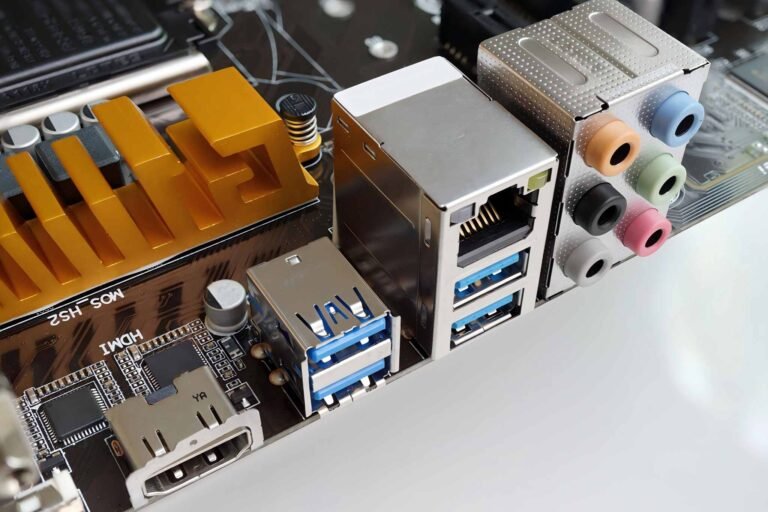
As electronic devices become faster and more compact, protecting high-speed interfaces from electrostatic discharge (ESD) and transient voltage events has become increasingly challenging. Traditional TVS diodes provide effective surge protection, but their capacitance can affect signal integrity in high-frequency applications.
A low capacitance TVS diode is designed to provide reliable transient protection while minimizing signal distortion. These devices are widely used in USB, HDMI, Ethernet, automotive communication systems, and other high-speed interfaces where maintaining data integrity is critical.
This guide explains how low capacitance TVS diodes work, why capacitance matters, where they are used, and how engineers can select the right device for their applications.
What Is a Low Capacitance TVS Diode?
A TVS (Transient Voltage Suppression) diode is a semiconductor protection device designed to protect electronic circuits from sudden voltage spikes caused by events such as electrostatic discharge (ESD), electrical transients, and surge pulses.
When a transient voltage exceeds a certain threshold, the TVS diode quickly becomes conductive and clamps the excessive voltage to a safer level, helping prevent damage to sensitive components such as integrated circuits, processors, and communication interfaces.
However, not all TVS diodes are suitable for high-speed signal applications. Traditional TVS devices often have relatively high junction capacitance, which can introduce additional loading to the signal line and affect high-frequency transmission.
A low capacitance TVS diode is specifically designed to reduce this unwanted electrical impact. By minimizing junction capacitance and parasitic capacitance, these devices provide ESD and transient protection while maintaining signal integrity.
Compared with standard protection devices, low capacitance TVS diodes are commonly optimized for:
- High-speed data interfaces
- Sensitive signal lines
- Compact PCB designs
- High-frequency communication systems
The main difference is that standard TVS diodes prioritize surge handling capability, while low capacitance TVS diodes balance protection performance with signal quality requirements.
| Type | Main Purpose | Typical Applications |
|---|---|---|
| Standard TVS diode | General transient and surge protection | Power lines, industrial circuits |
| Low capacitance TVS diode | Protection with minimal signal impact | USB, HDMI, Ethernet, high-speed interfaces |
| Ultra-low capacitance TVS diode | Advanced signal protection for very high-speed systems | Thunderbolt, high-speed data transmission |
Why Does TVS Diode Capacitance Matter?
Capacitance is one of the most important parameters when selecting a TVS diode for high-speed signal protection.
In low-frequency or power applications, additional capacitance usually has little impact. However, high-speed communication interfaces operate with rapidly changing voltage signals, where even small parasitic effects can influence transmission performance.
The capacitance of a TVS diode mainly comes from:
- Junction capacitance between semiconductor regions
- Package-related parasitic capacitance
- Internal device structures
When a protection device with excessive capacitance is placed on a high-speed signal line, it can create additional electrical loading. This may result in:
- Signal attenuation
- Reduced bandwidth
- Waveform distortion
- Increased insertion loss
- Communication errors
For this reason, engineers evaluate TVS diode capacitance, including junction capacitance and parasitic capacitance, during circuit protection design.
A lower capacitance value helps the protection device remain electrically “invisible” during normal operation while still responding quickly during transient events.
For high-speed applications, ultra-low capacitance TVS diodes are often designed with capacitance values below 1 pF to minimize their impact on signal performance.
| Capacitance Category | Typical Characteristics | Application Focus |
|---|---|---|
| Standard capacitance TVS | Higher junction capacitance | General circuit protection |
| Low capacitance TVS | Reduced capacitance for signal protection | Data interfaces and communication lines |
| Ultra-low capacitance TVS | Extremely low loading effect | High-speed and high-frequency applications |
When Do You Need a Low Capacitance TVS Diode?
A low capacitance TVS diode is mainly required when a circuit needs both transient protection and high signal integrity.
The key question for engineers is not only:
“Can this device protect my circuit?”
but also:
“Can it protect my circuit without affecting normal signal transmission?”
Low capacitance protection devices are especially important in applications where signal speed, bandwidth, and accuracy are critical.
High-Speed Data Interfaces
Modern communication interfaces transmit data at increasingly higher speeds. Additional capacitance from protection components can interfere with signal quality.
Common examples include:
- USB Type-C
- USB 3.x
- HDMI
- DisplayPort
- Thunderbolt
- Ethernet interfaces
These applications require protection components that provide ESD protection without degrading the high-frequency signal path.
Compact Electronic Devices
Portable and consumer electronics often have limited PCB space. Designers need small protection components that provide reliable ESD protection while maintaining electrical performance.
Low capacitance TVS diodes are commonly used in:
- Smartphones
- Tablets
- Laptops
- Wearable devices
- Portable communication equipment
Sensitive Signal and Communication Circuits
Some electronic systems use low-voltage or high-precision signals that are more sensitive to additional electrical loading.
Typical examples include:
- Sensor interfaces
- Data acquisition systems
- Industrial communication modules
- Automotive electronic systems
In these applications, maintaining signal accuracy is often as important as preventing transient damage.
Low Capacitance TVS Diode vs Standard TVS Diode
Choosing between a standard TVS diode and a low capacitance TVS diode depends on the circuit requirements.
Standard TVS diodes are often suitable for power protection applications where surge capability is the primary concern. However, for high-speed signal lines, excessive capacitance may negatively affect communication performance.
The following comparison highlights the main differences:
| Parameter | Standard TVS Diode | Low Capacitance TVS Diode |
|---|---|---|
| Primary function | Transient and surge protection | Transient protection with signal integrity preservation |
| Capacitance | Higher | Lower |
| Signal impact | May affect high-frequency signals | Designed for minimal signal distortion |
| Typical application | Power circuits, general protection | USB, HDMI, Ethernet, communication interfaces |
| Main design priority | Surge withstand capability | Protection performance + signal quality |
A low capacitance TVS diode is not necessarily a replacement for every standard TVS device. Instead, it is designed for situations where the protection component itself must have minimal influence on the signal path.
For example, a power supply line may tolerate several picofarads of capacitance, while a high-speed differential data pair may require a protection device with sub-picofarad capacitance.
How to Select a Low Capacitance TVS Diode?
Selecting a low capacitance TVS diode requires balancing several electrical parameters. Although capacitance is one of the most important factors for high-speed interfaces, it should not be considered separately from voltage protection capability, clamping performance, and package requirements.
A suitable protection device should provide sufficient ESD and transient protection while introducing minimal impact on normal signal transmission.
Capacitance Rating
The first parameter engineers usually check is the device capacitance.
For high-speed applications, lower capacitance generally helps reduce signal degradation. However, the required capacitance level depends on the interface speed and circuit design requirements.
Important capacitance-related specifications include:
- Channel capacitance (CIO)
- Junction capacitance
- Input capacitance
- Parasitic capacitance
Typical selection considerations:
| Application Type | Recommended Capacitance Consideration |
|---|---|
| General signal protection | Low capacitance may be sufficient |
| USB 3.x and high-speed interfaces | Very low capacitance preferred |
| Multi-gigabit communication systems | Ultra-low capacitance required |
For extremely high-speed interfaces, engineers often look for ultra-low capacitance TVS diodes with capacitance values below 1 pF to minimize signal loading.
Working Voltage (VRWM)
The reverse working voltage (VRWM) defines the maximum continuous operating voltage that the TVS diode can withstand without significant conduction.
When selecting a device, VRWM should be matched with the normal operating voltage of the protected line.
A device with an unsuitable working voltage may cause:
- Unexpected conduction during normal operation
- Insufficient protection margin
- Reduced circuit reliability
For example, a USB interface, automotive communication line, or sensor circuit may require different VRWM specifications depending on the system voltage.
Clamping Voltage (VC)
While low capacitance is important for signal integrity, the TVS diode must also effectively limit transient voltage.
The clamping voltage (VC) indicates the voltage level that remains after the TVS diode responds to a transient event.
A lower clamping voltage generally provides better protection for sensitive semiconductor devices.
Engineers should evaluate the balance between:
- Low capacitance
- Fast response time
- Low clamping voltage
- Surge current capability
A device with extremely low capacitance but insufficient transient protection may not provide reliable circuit protection.
ESD Protection Rating
Many low capacitance TVS diodes are designed specifically for ESD protection applications.
The common evaluation standard is IEC 61000-4-2, which measures:
- Contact discharge capability
- Air discharge capability
The required ESD rating depends on the application environment.
For example:
- Consumer electronics may require strong ESD protection due to frequent user interaction.
- Industrial equipment may require higher robustness due to harsh operating conditions.
- Automotive systems often require additional reliability considerations.
Package Size and PCB Layout
Package selection is another important factor, especially for compact electronic designs.
Low capacitance TVS diodes are commonly available in small surface-mount packages, including:
| Package Type | Main Advantage |
|---|---|
| SOD-523 | Small footprint for space-limited designs |
| SOD-323 | Common option for general signal protection |
| DFN / µDFN | Ultra-small package for high-density PCB layouts |
Smaller packages can reduce parasitic effects and help designers place protection components closer to sensitive interfaces.
For engineers evaluating different semiconductor package options and sourcing requirements, available electronic components can also be reviewed through China Chip Depot’s component categories.
Common Low Capacitance TVS Diode Applications and Packages
Low capacitance TVS diodes are widely used across consumer electronics, communication equipment, automotive systems, and industrial devices.
The following applications represent some of the most common use cases:
| Application | Why Low Capacitance Is Important |
|---|---|
| USB Type-C | Protects high-speed data lines while maintaining transmission performance |
| HDMI interfaces | Prevents signal distortion in high-frequency video transmission |
| Ethernet communication | Maintains signal integrity in network data lines |
| Thunderbolt interfaces | Supports extremely high-speed data transfer requirements |
| Automotive communication systems | Protects sensitive electronic networks |
| Portable electronics | Provides ESD protection with limited PCB space |
Modern interface designs increasingly require protection devices that combine:
- Low capacitance
- Small package size
- High ESD performance
- Reliable transient response
This combination makes low capacitance TVS diodes an important component for next-generation electronic systems.
FAQs
A low capacitance TVS diode is a transient protection device designed to protect high-speed signal lines while minimizing additional capacitance.
High capacitance can affect signal integrity by causing signal loss or distortion in high-speed circuits.
They are commonly used in USB Type-C, HDMI, Ethernet, Thunderbolt, automotive, and other high-speed interfaces.
For high-speed applications, capacitance below 1 pF is commonly considered ultra-low capacitance.